

2026 Winter product update
21. January 2026
New year, new product update! Towards the end of 2025, the QruiseOS team worked on updates that enhanced performance, usability and stability, with 2026 bringing some workflow viewer improvements. As for QruiseML, we've been working very hard on the next major release, so we don't have anything for you this time, but stay tuned — exciting news to follow in the coming weeks!
QruiseOS
Experiment Database
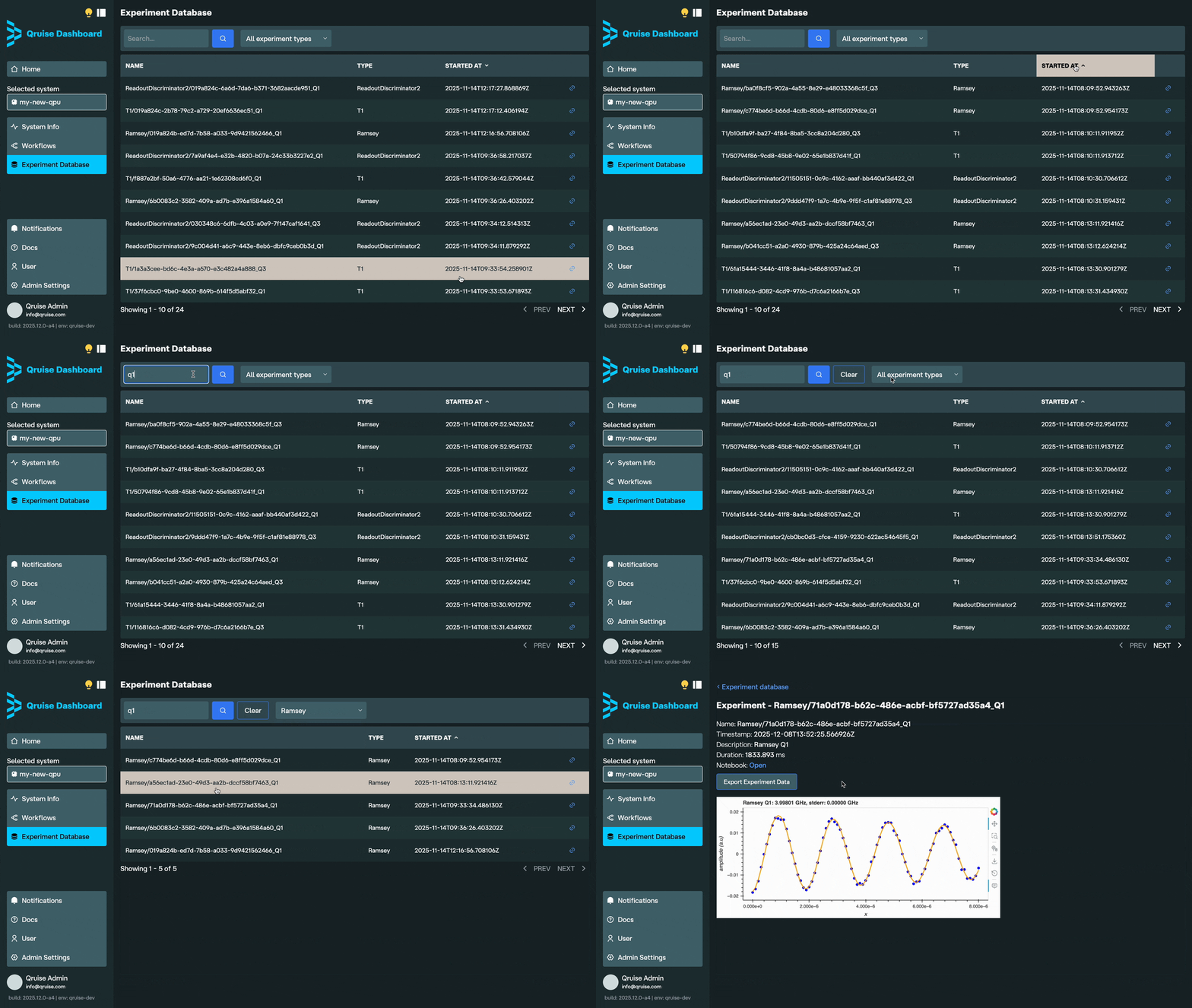
The Experiment Database has been updated to be more responsive and intuitive, with added pagination. You can now filter by experiment name, type, or start time, or use the search bar to look up experiments by these fields, as well as by qubit or experiment ID. This makes it easy to track your QPU’s behaviour over time.
The experiment details now open on a separate page, loading around five times faster than before. This layout provides more space to view experiment outputs like plots and allows for better sharing of individual experiments.
API
The backend API has been updated to enhance usability and flexibility.
- Experiments can now be sorted by
nameorstarted_at, making it easier to compare relevant experiment runs in order. - Experiments can now be retrieved not only by their unique
id, but also by their fullname; for example,ReadoutDiscriminator2/019a732c-35e4-7e30-a20f-d5013631e626_Q1. Both options are supported through the same experiment endpoint. - The
/versionendpoint now also returns the environment name alongside the version, making environment tracking easier.
Fully asynchronous backend
The backend has been reworked to run fully asynchronously, allowing it to handle around 10× more operations concurrently. For users, this means no more blocking requests or database locks, providing a boost in stability and performance across the stack while running experiments.
Maintenance & housekeeping
We upgraded the workflow engine to use Prefect 3, which mainly allows us to upgrade other dependencies to newer versions and resolve a lot of conflicts. Prefect 3 will also give the opportunity to use new functionalities for workflow scheduling in the future.
Keycloak authentication has been made more robust: we fixed a few bugs causing deadlocks on container startups caused by delayed health checks.
Authentication token verification has also been optimised, significantly improving performance for high numbers of parallel requests.
We added Redis to the stack, which is the first step in bringing a caching and background worker architecture to our solution. More details will follow in a future release.
Partially completed workflows
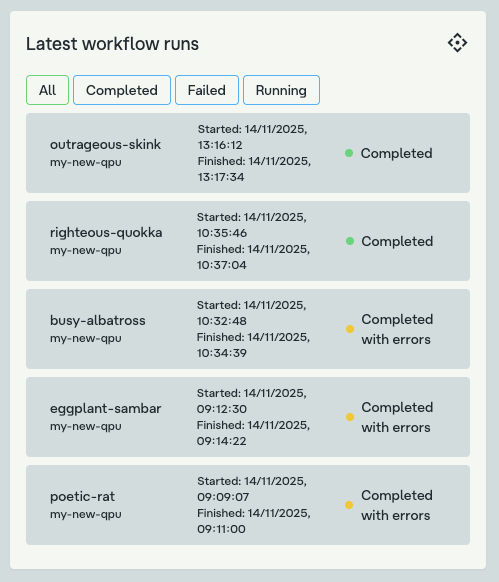
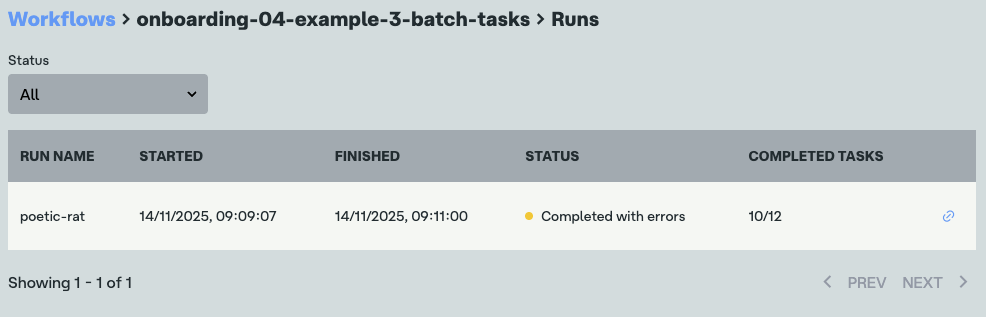
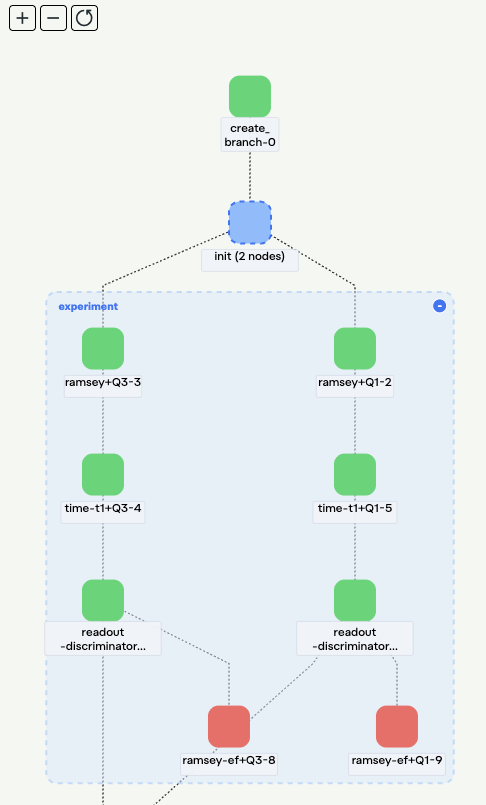
Workflows that have some failed tasks are now explicitly shown as 'Completed with errors'. This allows you to distinguish between workflows that completed with all tasks successful, those where some tasks failed but the overall workflow still completed, and those where the workflow did not complete.
Collapsible workflow graphs
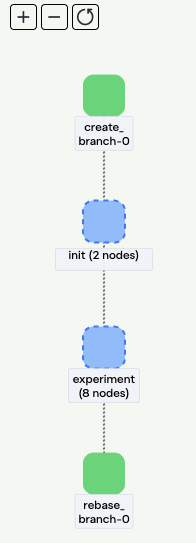
Subflows in workflows can now be collapsed to make the graph view easier to navigate for large workflows.
Stay informed with our newsletter
Subscribe to our newsletter to get the latest updates on our products and services.