

Updates
August 2026July 2026June 2026April 2026March 2026February 2026January 2026December 2025November 2025October 2025August 2025July 2025May 2025January 2025August 2024August 2026 (v2026.08)
QruiseML
This update includes updated documentation for the new version of QruiseML released last month, as well as one small software fix.
Building blocks docs
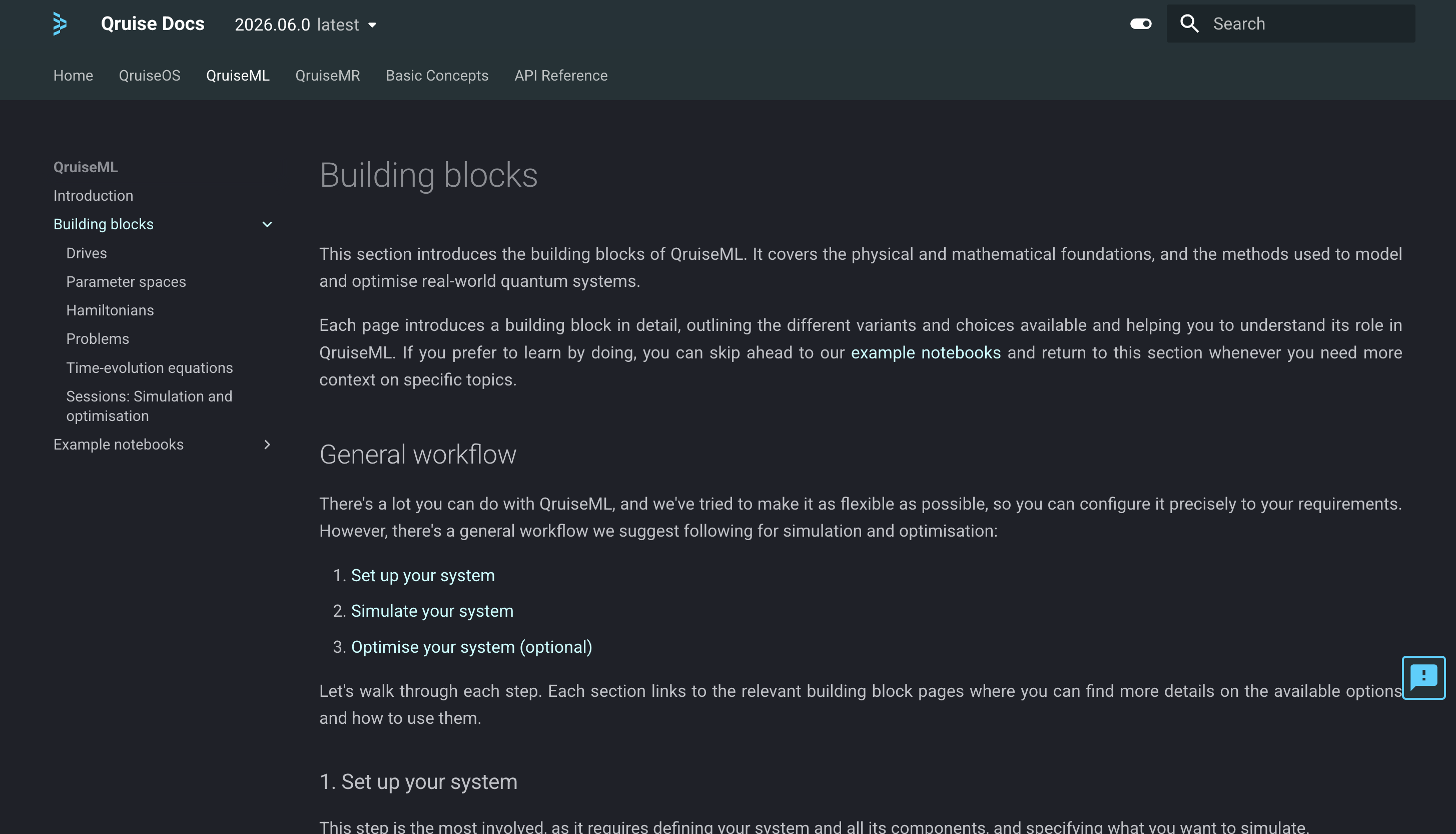
We've added a Building blocks section to our docs, covering the main concepts used to build and run simulations and perform quantum optimal control. These pages introduce concepts such as drives, parameter spaces, Hamiltonians, problems, time-evolution equations, and sessions, and explain how they work together in QruiseML.
Example notebooks
We've added two example notebooks to help you get started with QruiseML:
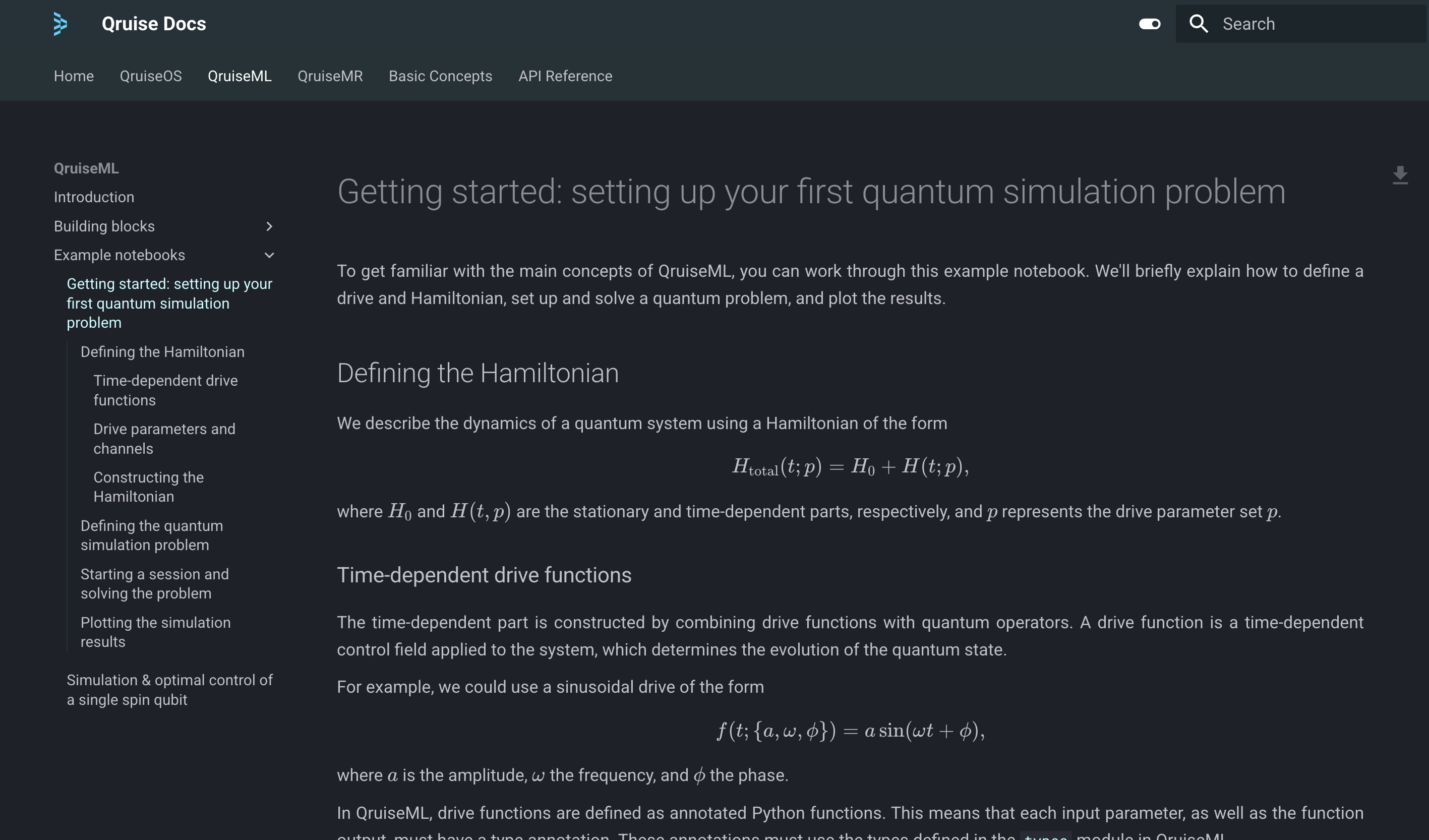
Getting started: setting up your first quantum simulation problem
This example introduces the main concepts of QruiseML and guides you through setting up and running a simulation of a two-level system.
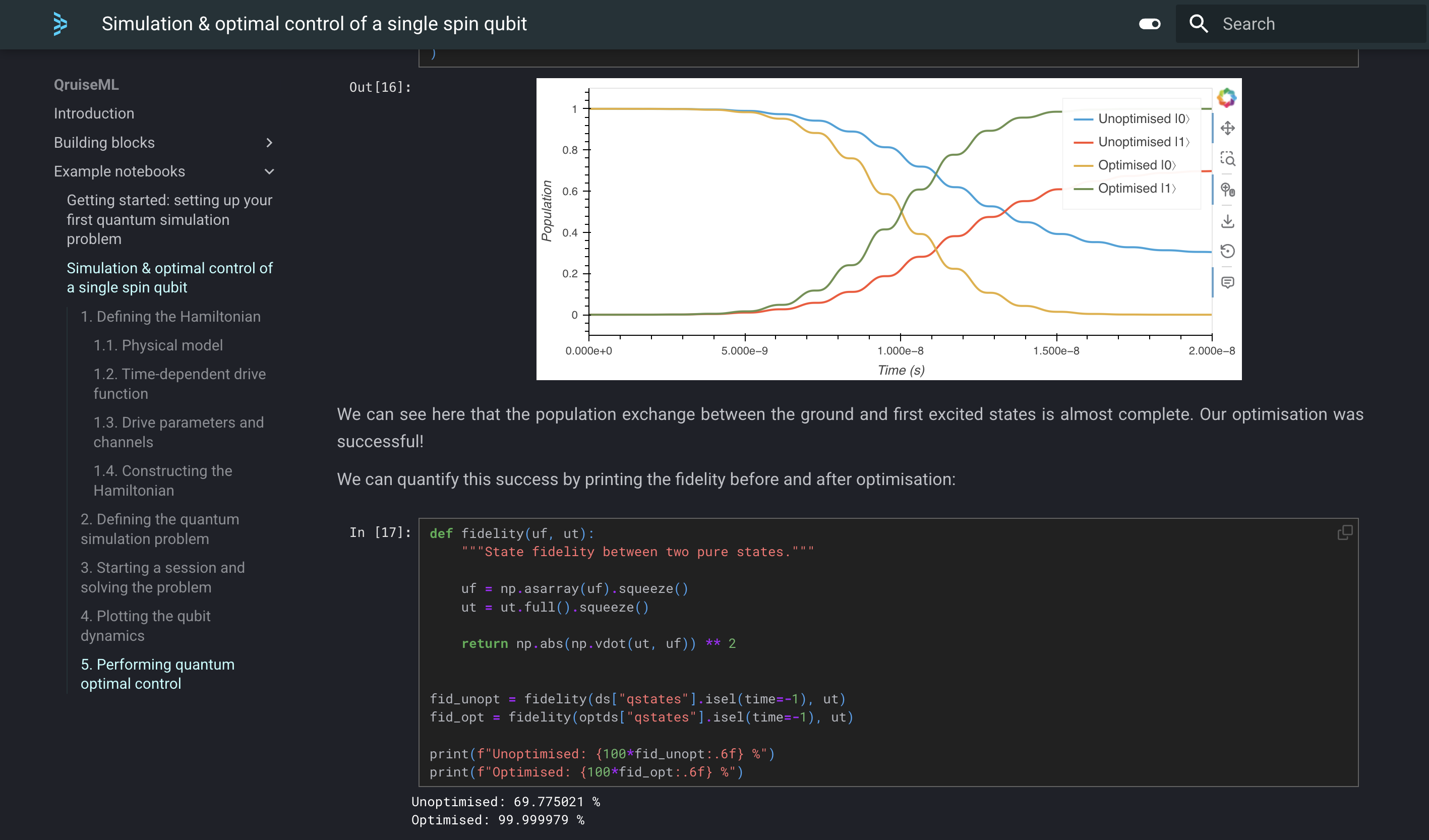
Simulation & optimal control of a single spin qubit
This example shows you, step-by-step, how to simulate the dynamics of a single spin qubit and perform quantum optimal control using QruiseML.
The concepts described here can also be applied to other systems, so these notebooks should give you a good starting point for your own simulations and optimal control. We'll also continue adding examples for different systems.
You can check out the example notebooks in your install or on our docs site now!
Removed redundant col dimension from Session.evolve() results
Previously, Session.evolve() included a col dimension in its results to support matrix outputs, even when the result was a vector and the dimension was unnecessary. This redundant dimension is now removed for vector results, while matrix results, such as density matrices, remain unchanged.
Stay informed with our newsletter
Subscribe to our newsletter to get the latest updates on our products and services.